


How to Choose a Staircase Chandelier for a Tall Home
STAIRCASE LIGHTING GUIDE: A staircase chandelier can connect the foyer, stair landing and upper hallway into one considered interior. The right fixture gives a tall space structure and atmosphere without making the stairs feel crowded.
In this guide
- How to choose a modern staircase chandelier
- Styles for straight, curved and spiral stairs
- Crystal, globe, floral, branch and LED options
- Size, drop length and viewing-angle planning
- Common installation and placement mistakes
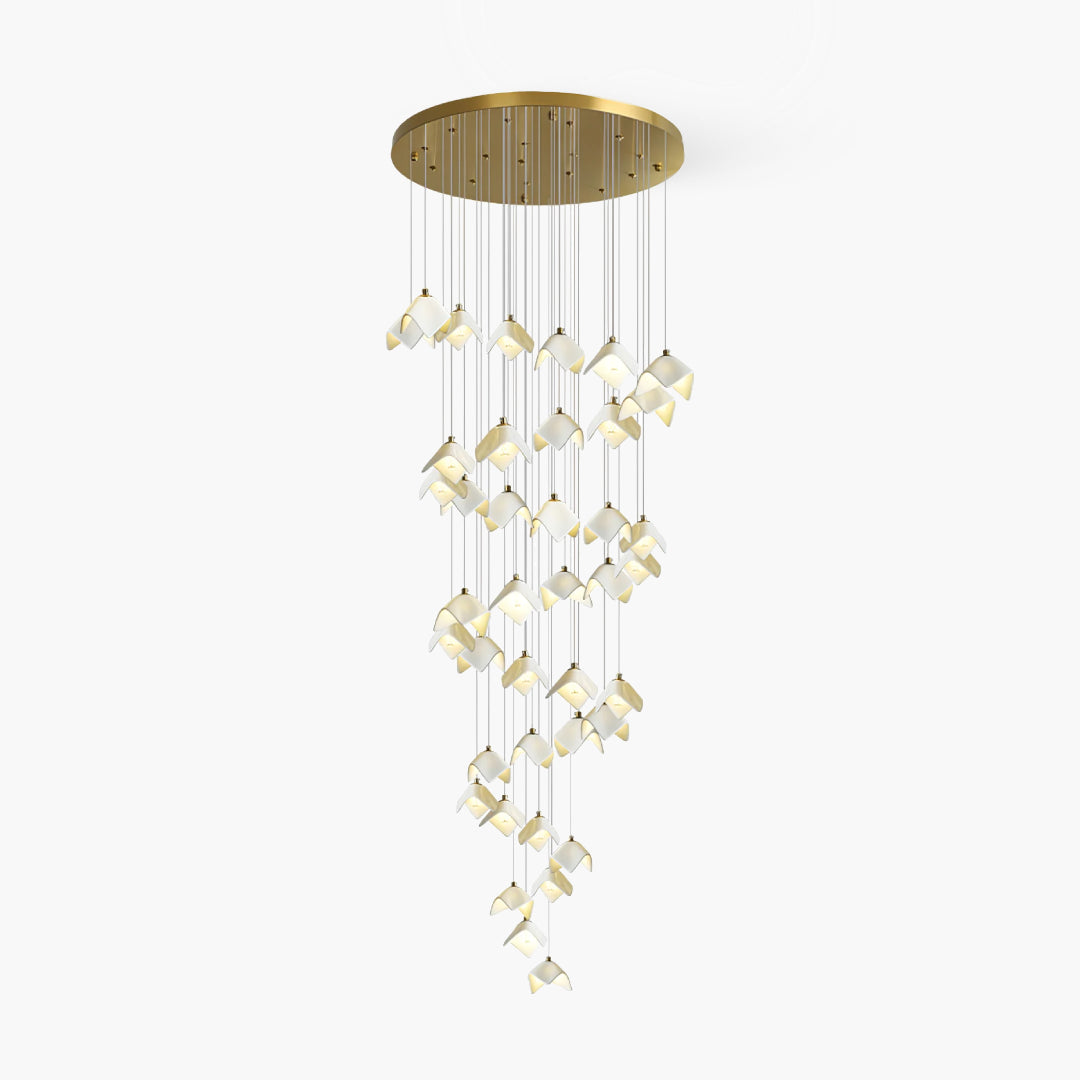
Quick answer
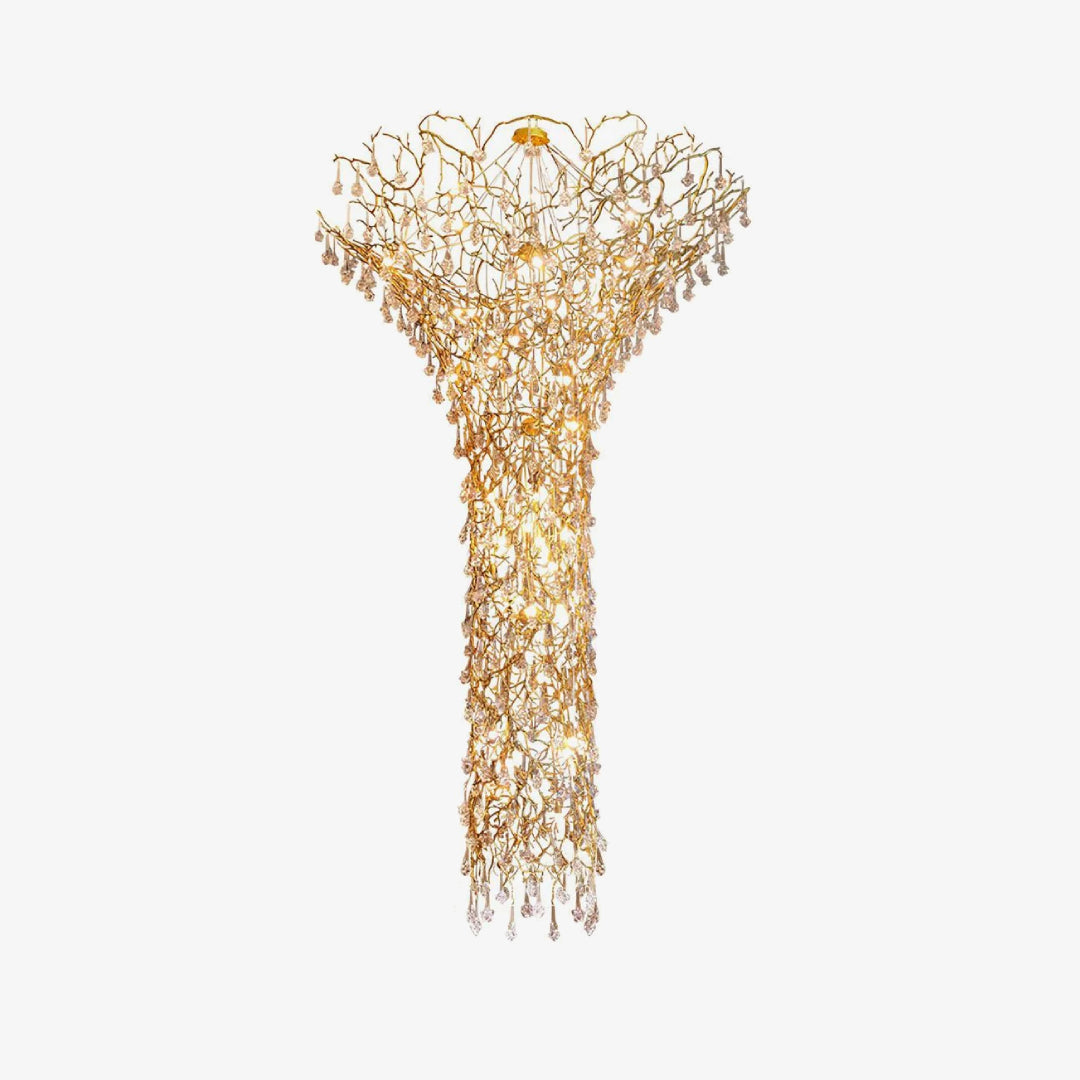
For most tall stairwells, a vertically composed chandelier works better than a short, wide dining-room fixture. Cascading crystal drops, glass globe clusters, slim LED forms and sculptural branch designs can follow the height of the space more naturally.
A narrow staircase usually suits a slimmer drop. A broad double-height foyer can support a wider cluster or sculptural centerpiece. A curved or spiral staircase may look more cohesive with rounded, staggered or flowing forms.
What makes a staircase chandelier feel modern?
The modern look usually comes from proportion, repetition, clean geometry and a strong vertical silhouette. The finish matters, but the relationship between the fixture and the architecture matters more.
Vertical rhythm
Long drops, stacked forms and staggered lights guide the eye through a tall stairwell.
Visual order
Repeated globes, crystals, leaves or light tubes should feel intentional rather than crowded.
Open breathing room
The fixture should occupy the vertical volume without narrowing the stairs or competing with the railing.
Multiple viewpoints
Check the entry, lower stairs, upper landing and adjacent rooms before choosing the final shape.

Look at the chandelier from more than one angle
A staircase fixture is viewed in motion. The side profile and lowest point can matter as much as the front view. A chandelier that looks balanced in a product image may need a different width or drop in the actual stairwell.
Modern staircase chandelier comparison
Use this table to identify the direction that matches your staircase before comparing product specifications.
| Style | Suitable for | Visual effect | Choose it when |
|---|---|---|---|
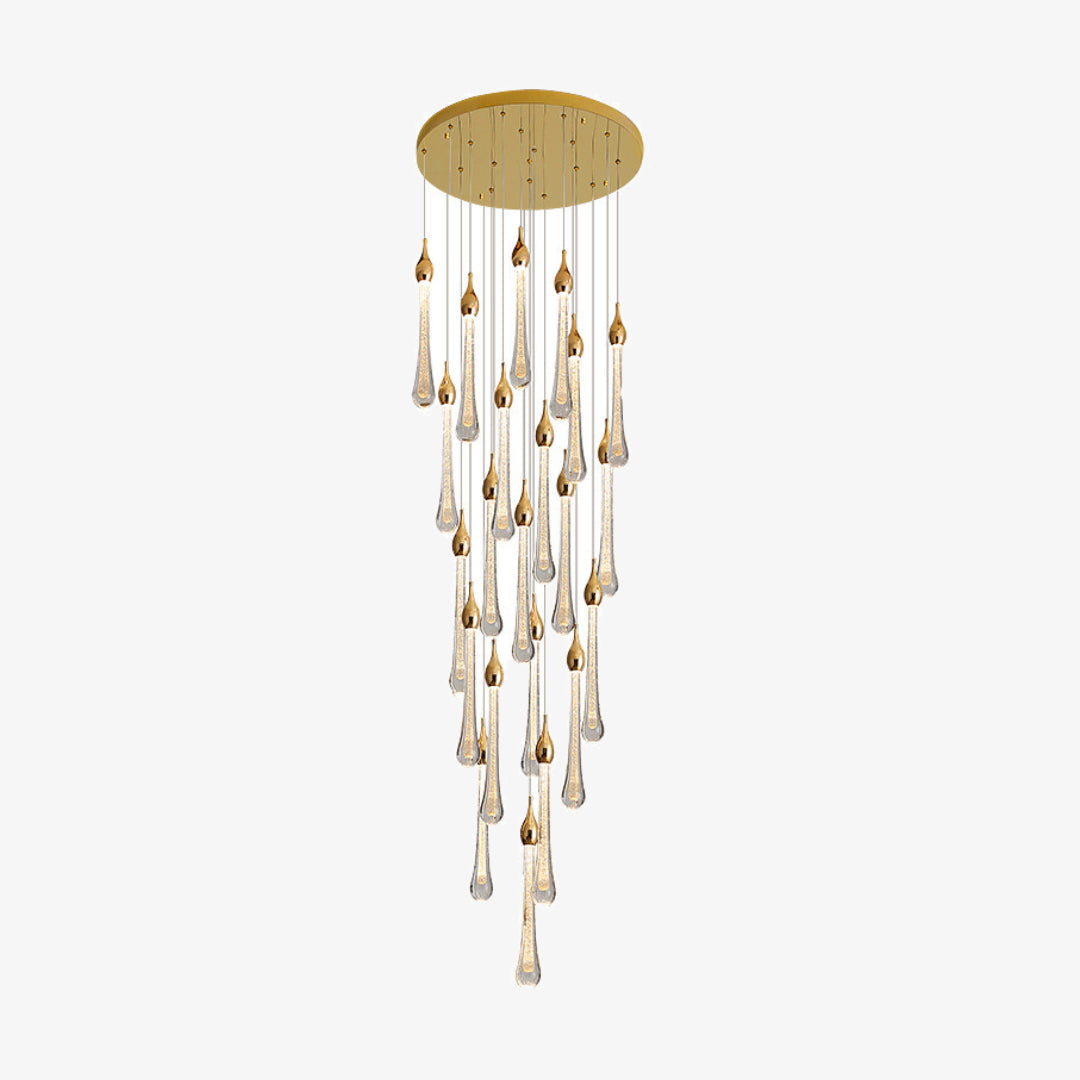
| Cascading crystal | Grand foyers and villas | Sparkle and movement | You want a polished focal point |
| Glass globe cluster | Curved stairs and duplex rooms | Soft floating highlights | You prefer a lighter effect |
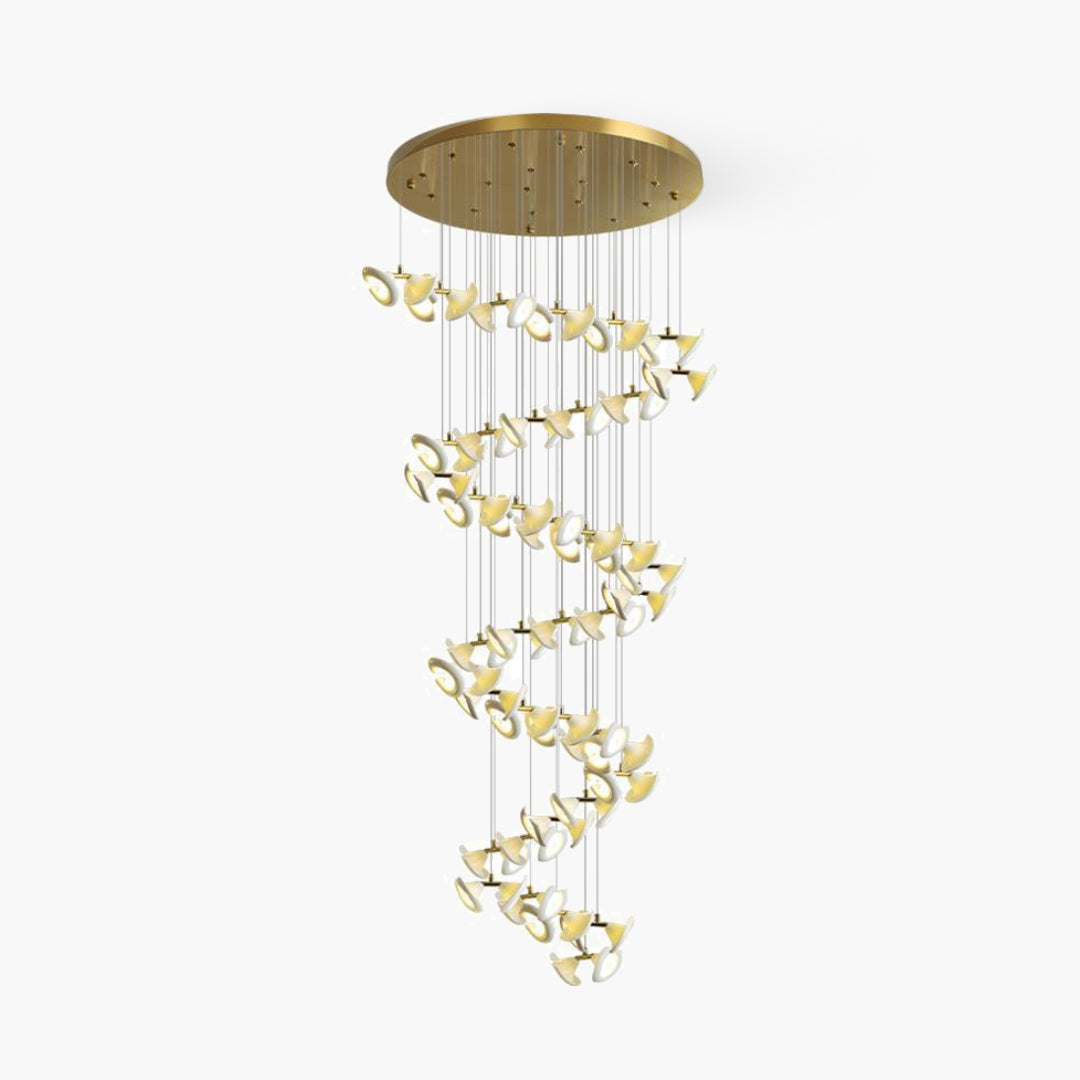
| Floral or butterfly | Artistic entries and modern villas | Organic decorative detail | You want a softer statement |
| Branch or leaf | Wood-and-stone interiors | Nature-inspired sculpture | You want an organic line |
| Linear or tube | Contemporary stairwells | Clean architectural rhythm | You want less sparkle |
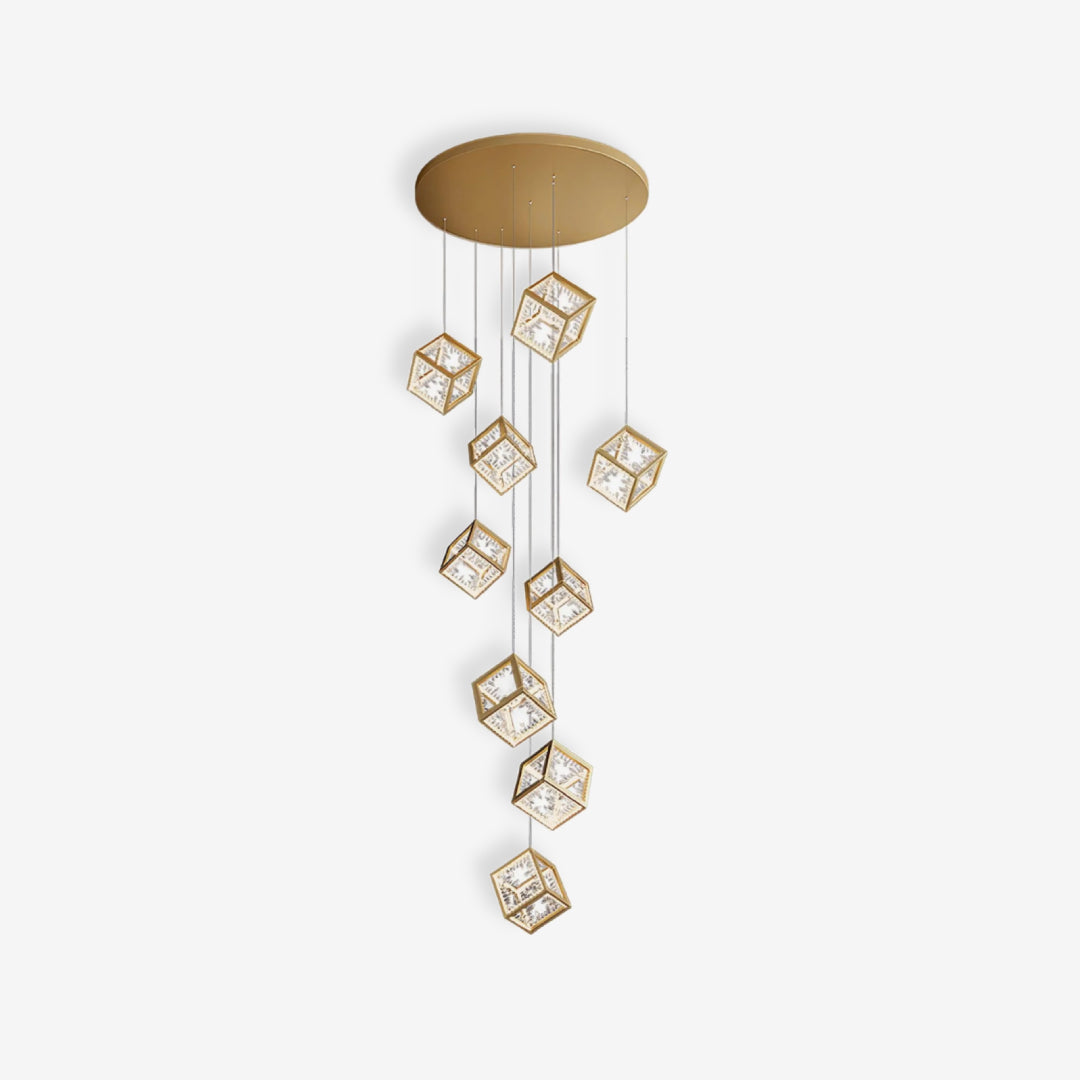
| Ring or sculptural cluster | Wide double-height foyers | Graphic layered centerpiece | You want dramatic modern lighting |
Staircase chandelier styles to explore
The following examples are selected from the Dekoorlight staircase chandelier collection. Confirm current dimensions, finishes and electrical details on each product page before purchase.
How to size a chandelier for a staircase
A staircase chandelier must relate to ceiling height, open vertical volume, railing position, walking clearance and the way it is viewed from different floors.
- Measure the ceiling height: Record the distance from the finished floor to the mounting point.
- Measure the stair opening: Note the width and length of the open vertical area, not only one stair flight.
- Measure nearby obstacles: Include railings, landings, doors, beams, windows and upper hallways.
- Separate body height from suspension length: Review the chandelier body, rods, cables or adjustable drop independently.
- Compare several viewpoints: A chandelier that looks narrow from the entry may feel wider from the upper landing.
Planning rule: A broad double-height foyer may support a larger cluster or sculptural chandelier. A narrow stairwell usually benefits from a slimmer vertical form rather than a wide ring or dense cluster.
Staircase chandelier placement and clearance
There is no universal hanging height for every staircase. The final position depends on the fixture dimensions, open volume, railing, walking path and the way the chandelier is viewed from different floors.
- Center the fixture in the open volume: Do not automatically position it over one individual stair tread.
- Keep circulation clear: The lowest part should not interfere with walking paths, stair treads, doors or reachable areas.
- Check the upper landing: The chandelier should feel finished from the second floor, not only from below.
- Review the railing relationship: A wide design can feel crowded when it sits too close to a balustrade.
- Plan installation access: Tall, heavy or multi-part chandeliers may require specialist equipment.
Have the final mounting position, ceiling support and electrical connection reviewed by a qualified professional. Product-page dimensions should be used together with the actual conditions in your home.
Think in layers, not just inches
A statement staircase chandelier may define the main focal point, but it does not always need to provide every layer of light. A comfortable stairwell often combines decorative lighting with practical illumination for steps, landings and nearby rooms.
- Use the chandelier to establish the primary visual focus.
- Check that stair treads remain easy to see after dark.
- Consider recessed lights or wall lighting where the architecture needs additional definition.
- Choose a light color that works with the flooring, wall color and adjacent rooms.
- Use dimming only when the selected fixture and electrical system support it.
- Check glare from the upper landing as well as from the foyer below.
Common staircase chandelier mistakes
- Choosing a short chandelier for a two-story foyer: A compact fixture can disappear inside a tall space.
- Choosing a fixture that is too wide: Wide rings and dense clusters need open space around them.
- Looking at only one product image: Evaluate the side profile, lowest point, upper-floor view and stair opening.
- Ignoring the staircase shape: Straight, curved, spiral and square layouts may need different visual directions.
- Using too much detail in a narrow opening: The density of leaves, crystals and globes must suit the space.
- Leaving installation questions until the end: Confirm dimensions, mounting method, suspension adjustment and access before ordering.
- Using the chandelier as the only light source: Decorative light may create atmosphere without evenly illuminating every step.
Frequently asked questions
Choose a chandelier that fits the architecture
Begin with the staircase shape, compare the visual effect you want, and confirm the width, drop length and installation requirements before ordering.


